
10 Essential Benefits of a Table Top Water Jet Cutting Machine for Precision Prototyping
In the world of precision manufacturing, floor space is often a luxury. Small machine shops, engineering labs, and educational institutions require industrial-grade cutting capabilities without the massive footprint of traditional gantries. The table top water jet cutting machine has emerged as the premier solution for these constrained environments.
This compact technology bridges the gap between hobbyist tools and heavy industrial equipment. It utilizes high-pressure water streams, often mixed with abrasive, to slice through materials ranging from hardened steel to delicate glass. The process creates no heat, ensuring the material properties remain unchanged.
Leading manufacturers like VICHOR have optimized these systems for reliability and precision. Whether you are creating aerospace prototypes or custom jewelry, understanding the capabilities of a compact waterjet is crucial. This article explores the functionality, costs, and distinct advantages of integrating this technology into your workflow.
1. Understanding the Table Top Water Jet Cutting Machine
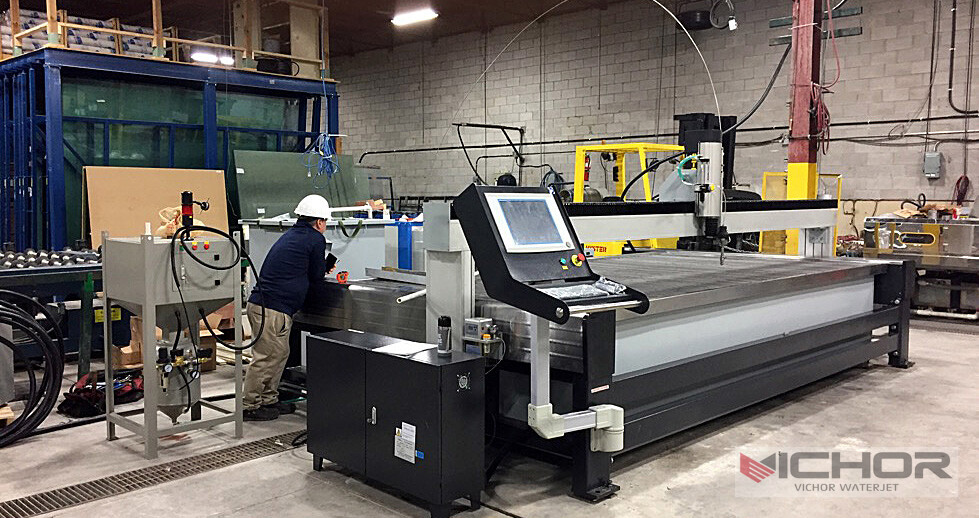
A table top water jet cutting machine operates on the same principles as its larger counterparts. It uses a high-pressure pump to force water through a jewel orifice. The key difference lies in the size of the cutting bed and the overall footprint.
These machines typically feature a cutting envelope ranging from 12×12 inches to 24×48 inches. Despite their size, they generate pressures between 30,000 and 50,000 PSI. This is sufficient to cut metals exceeding 1 inch in thickness.
The system consists of three main components:
- The Pump Unit: Usually a direct-drive pump stored underneath or beside the table.
- The Tank and Table: A water-filled catchment tank with slats to support the material.
- The Control Interface: A computer or tablet running CNC software to direct the nozzle.
2. Material Versatility and Compatibility
One of the strongest selling points of waterjet technology is its ability to cut virtually anything. Unlike lasers, which are limited by material reflectivity, or plasma, which requires conductive metals, waterjets are material-agnostic.
Common materials processed include:
- Metals: Aluminum, Titanium, Stainless Steel, Brass, Copper.
- Composites: Carbon Fiber, G10, Fiberglass (without delamination risks).
- Stone and Glass: Marble tiles, granite, and stained glass.
- Soft Materials: Rubber gaskets, foam, and silicone.
For a small workshop, this means a single machine can handle diverse projects. You can switch from cutting a rubber seal to a titanium bracket in minutes, simply by changing the setup parameters.
3. The Cold Cutting Advantage
Thermal distortion is a major issue in precision fabrication. Laser and plasma cutters introduce significant heat into the part. This creates a Heat Affected Zone (HAZ) where the metal’s temper is altered, often making it brittle.
A table top water jet cutting machine is a cold cutting tool. The water acts as a coolant during the erosion process. This is vital for aerospace and medical applications where material certification is strict.
Because there is no HAZ, parts come off the table ready for use. There is no need for secondary annealing or heat-treating processes to restore the material’s strength.
4. Precision and Edge Quality
Compact waterjets are designed for high-tolerance work. The rigidity of the smaller frame often allows for excellent vibration dampening. This results in high precision, typically holding tolerances within +/- 0.003 to 0.005 inches.
The edge quality is determined by the cutting speed. A slow cut produces a smooth, sandblasted finish. A fast cut serves as a rough separation. Users can adjust these settings based on the project requirements.
VICHOR machines utilize advanced motion control to ensure that corners remain sharp and curves are smooth. This level of detail is difficult to achieve with hand tools or basic CNC routers.
5. Space Efficiency and Installation
The primary appeal of these machines is their form factor. Traditional waterjets require a dedicated industrial bay. A table top unit can fit through a standard door frame and operate in a garage or a small lab.
Installation requirements are generally modest:
- Power: Often runs on single-phase 220V or standard 3-phase power.
- Water Source: Standard tap water input is usually sufficient.
- Drainage: A nearby floor drain or a filtration system for water recycling.
This accessibility opens the door for R&D departments and universities to bring prototyping in-house. It eliminates the long lead times associated with outsourcing parts to job shops.
6. Comparing Table Top Waterjets to Laser Cutters
When equipping a small shop, the choice often falls between a laser and a waterjet. While lasers are faster on thin sheet metal, they lack the versatility of waterjets.
Thickness Limitations
A compact fiber laser typically struggles with metals thicker than 0.25 inches. A table top water jet cutting machine can cut 1-inch steel or 2-inch aluminum effectively, albeit slowly.
Reflective Materials
Lasers have difficulty cutting copper and brass due to beam reflection. Waterjets utilize mechanical erosion, so reflectivity is irrelevant. This makes them the superior choice for electrical component fabrication.
Safety Concerns
Lasers require strict ventilation for toxic fumes and eye protection from scattered radiation. Waterjets produce no fumes. The cutting action happens underwater or just above the surface, trapping dust in the tank.
7. Cost of Ownership and Consumables
Understanding the operational costs is essential for ROI calculation. The initial investment for a table top system is significantly lower than a full-sized gantry, but running costs must be factored in.
Key consumable costs include:
- Abrasive (Garnet): The sand used to erode the material.
- Nozzles and Orifices: Wear parts that focus the stream.
- Pump Seals: Maintenance items for the high-pressure system.
- Water and Electricity: Standard utility costs.
While slower than a laser, the elimination of secondary finishing (like deburring or grinding) often makes the total cost per part competitive for low-volume production.
8. Software and Workflow Integration
Modern waterjet systems prioritize user experience. The workflow typically begins with a standard vector file (DXF, DWG, or SVG). This is imported into the machine’s software.
The software handles the pathing, lead-ins, and cutting speeds automatically based on the material type and thickness selected. This “load and go” capability reduces the need for highly specialized operators.
VICHOR integrates intuitive control systems that allow users to nest parts efficiently. Nesting optimizes material usage, reducing waste on expensive sheets like titanium or carbon fiber.
9. Maintenance and Reliability
High-pressure water is a destructive force, not just to the material but to the machine itself. Routine maintenance is required to keep the system running at peak performance.
Operators should expect to perform the following:
- Slats Replacement: The metal slats supporting the material will eventually erode and need replacing.
- Nozzle Inspection: The mixing tube widens over time, reducing accuracy. It needs regular replacement.
- Tank Cleaning: The spent abrasive (sludge) accumulates in the tank and must be shoveled out or pumped out.
Reliable brands design their machines for serviceability. Easy access to the pump and cutting head simplifies these routine tasks, minimizing downtime.
10. Future Trends in Compact Manufacturing
The demand for micro-manufacturing and rapid prototyping is driving innovation in this sector. We are seeing a trend toward higher pressures in smaller packages, improving cutting speeds.
Hybrid machines are also emerging, combining waterjet cutting with milling capabilities. However, for pure cutting power, the standalone table top water jet cutting machine remains the most robust option.
Connectivity is another frontier. Remote monitoring allows shop managers to track machine status and consumable levels from their smartphones, ensuring efficient production planning.
Why Choose VICHOR for Your Shop
Selecting the right equipment partner is as important as the technology itself. VICHOR stands out by offering robust engineering in a compact footprint.
Their systems are built with industrial-grade components, ensuring that “table top” does not mean “light duty.” They provide the necessary support to help new users navigate the learning curve of abrasive waterjet cutting.
From initial installation guidance to long-term parts supply, having a dedicated manufacturer ensures your investment continues to generate value for years.
Conclusion
The table top water jet cutting machine has democratized access to high-end fabrication. It allows inventors, small businesses, and researchers to work with materials that were previously difficult or impossible to machine in-house.
By offering cold cutting precision, material versatility, and a manageable footprint, these machines solve the unique challenges of modern prototyping. Whether you are cutting thick steel parts or intricate glass art, the technology delivers consistent results.
For those ready to upgrade their workshop capabilities, exploring the solutions offered by VICHOR is the first step toward manufacturing independence. Embrace the power of waterjet technology and expand what your shop can create.
Frequently Asked Questions (FAQ)
Q1: How thick can a table top water jet cutting machine cut?
A1: While it depends on the specific material and pump pressure, most table top systems can effectively cut metals up to 1 inch (25mm) thick. Softer materials like foam or rubber can be cut at thicknesses of 2 to 3 inches or more. However, cutting speeds decrease significantly as thickness increases.
Q2: Does the machine require a special water supply?
A2: Generally, no. Most table top units operate fine with standard tap water. However, if your local water has high mineral content (hard water), it is recommended to use a water softener or filtration system to extend the life of the high-pressure seals and nozzles.
Q3: Is the operation of a waterjet loud?
A3: The cutting process itself can be noisy, especially when piercing the material. However, because table top units are smaller, they can often be enclosed. Cutting underwater (submerged cutting) also significantly reduces noise and splash, making it suitable for smaller workshop environments.
Q4: How messy is the waterjet cutting process?
A4: Waterjet cutting involves water and sand (abrasive), so it can be messy if not contained. Table top units usually have enclosed covers or splash guards. The waste product is a wet sludge in the tank, which needs to be cleaned out periodically, but the airborne dust is virtually non-existent compared to dry grinding.
Q5: Can I cut tempered glass with a waterjet?
A5: No, tempered glass cannot be cut with a waterjet (or any other cutter). The internal stress in tempered glass will cause it to shatter instantly upon piercing. You must cut the glass while it is annealed (non-tempered) and then temper it afterward if required.